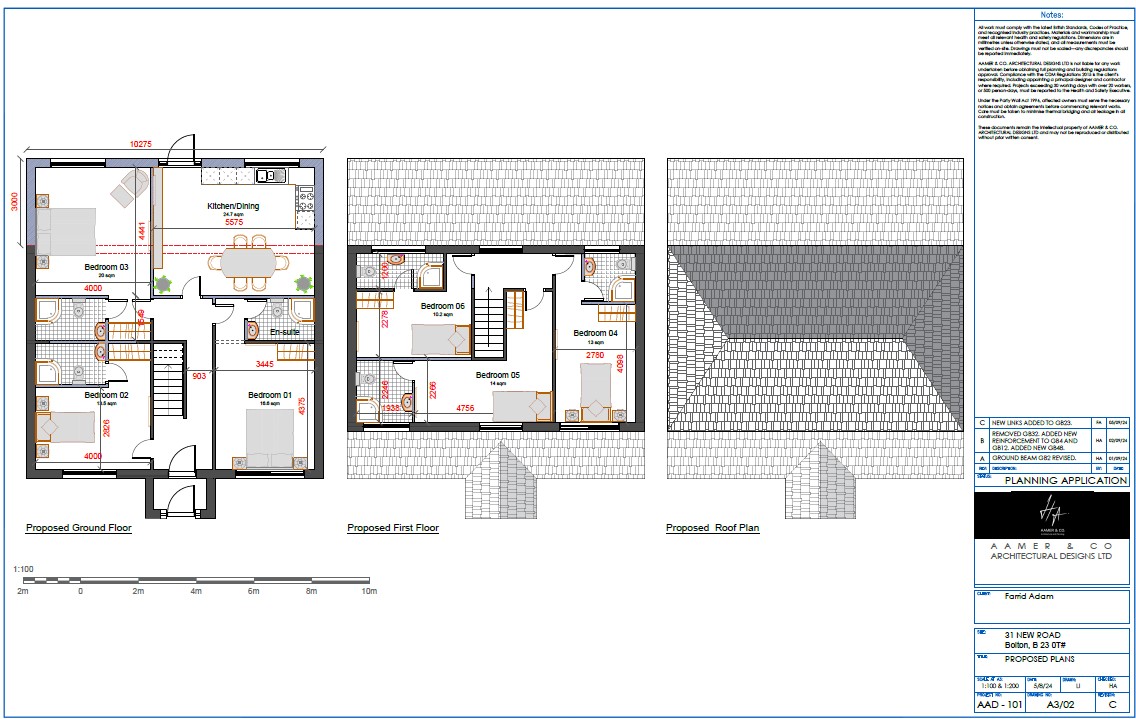
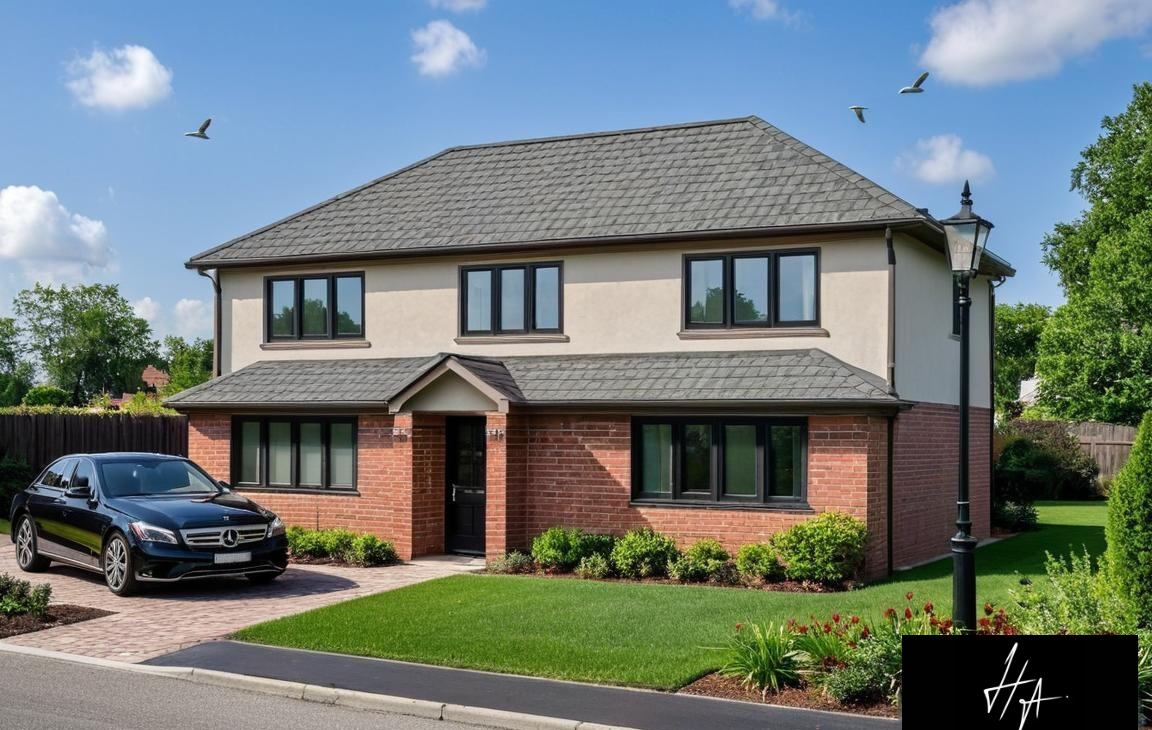
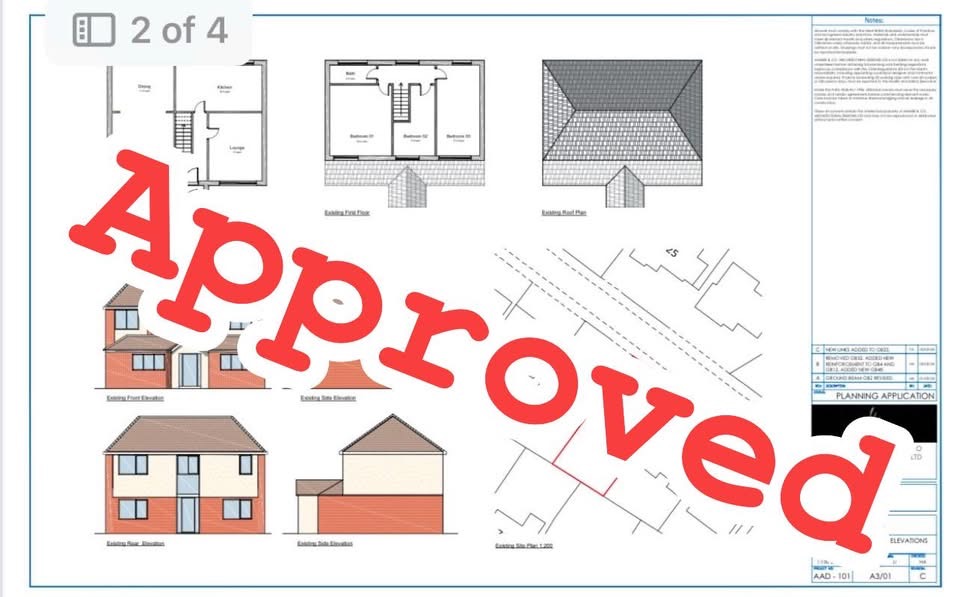
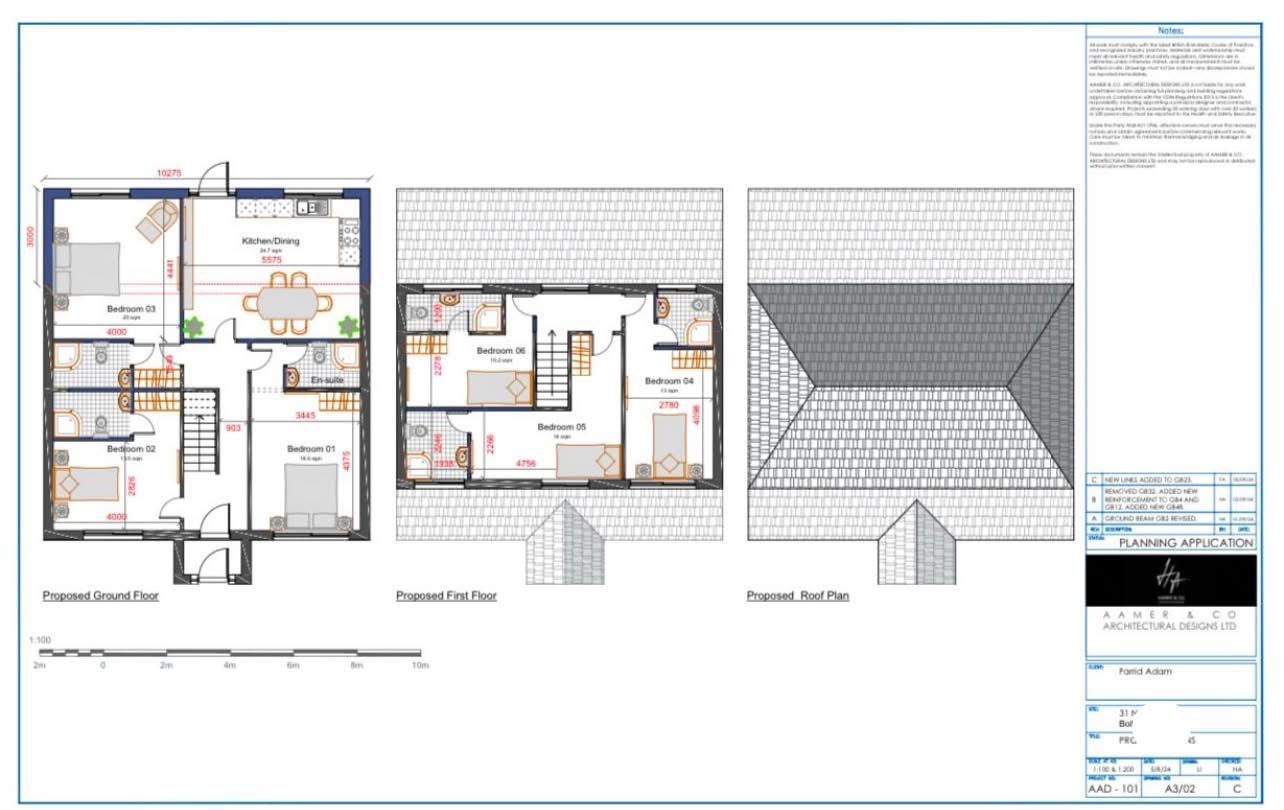
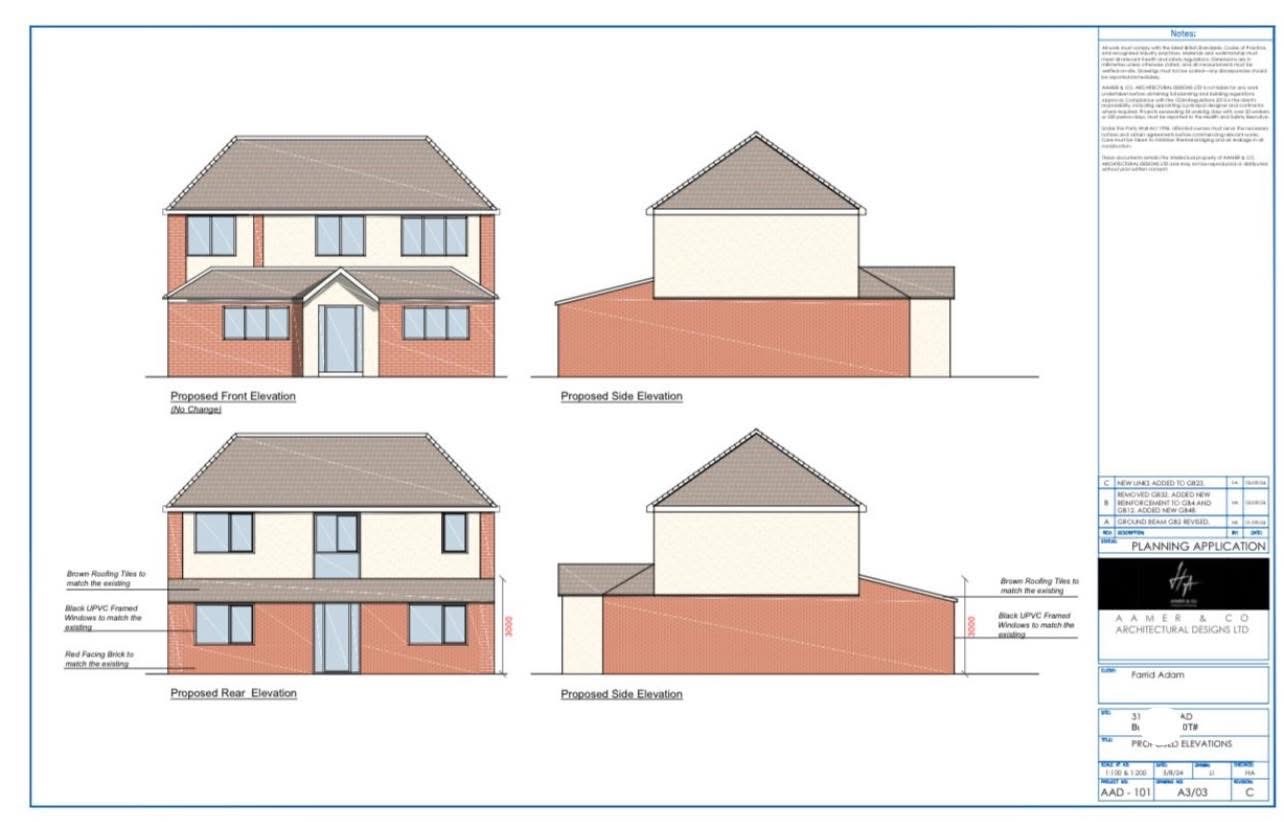
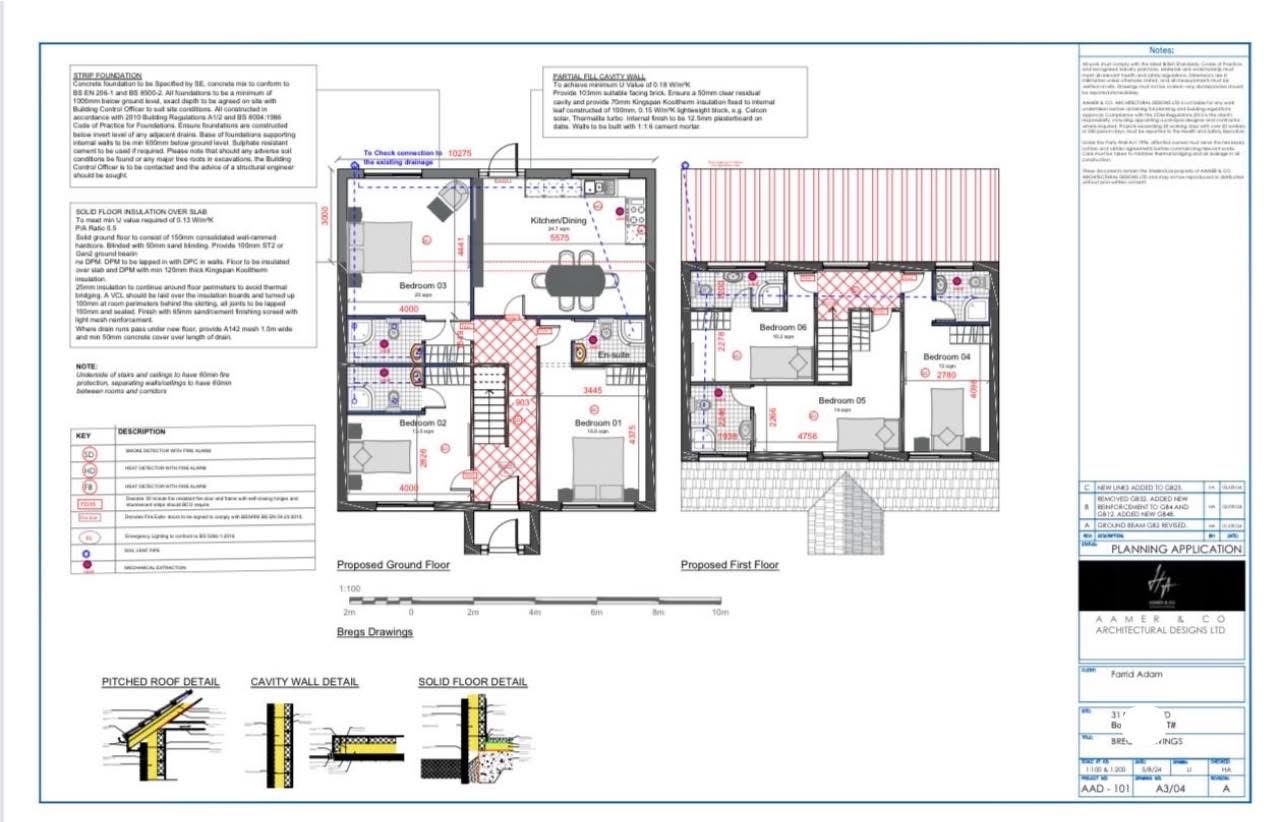
As HMO developments continue to outperform traditional rentals—often yielding 30–50% annual ROI—architects are playing an increasingly strategic role in helping investors unlock the full potential of residential properties. The ongoing transformation of a standard dwelling on Whitehill Avenue, Luton (LU1) into a high-performing 6-bed HMO, with plans to expand to a 10-bed Sui Generis, demonstrates how a structured architectural process can convert an ordinary home into a long-term income-generating asset.
What makes this project particularly noteworthy is not just the design outcome, but the precise sequence of stages that ensure full regulatory compliance and maximum development value.
1. Fast Feasibility Study: Identifying Potential Before Purchase
Every successful HMO project begins long before construction—with a pre-purchase feasibility assessment.
For the Luton property, this included reviewing:
Local Article 4 restrictions (critical for C3 → C4 conversions)
Opportunities for rear extensions under Permitted Development (PD)
Structural potential for loft expansion
Minimum room sizes, fire escape routes, and circulation feasibility for a 6–10 bed layout
Projected rental income and ROI forecast
This stage ensures the investor buys a property with viable development potential, avoiding costly surprises later.
2. Determining Planning Pathways: Permitted or Full Planning?
A key architectural task is confirming whether the proposals fall under Permitted Development rights or require a Full Planning Application.
For this scheme:
Permitted Development allowed:
Full Planning Permission will be needed for:
Upgrading to a 10-bed HMO (Sui Generis)
Any extension beyond PD thresholds
External alterations not covered under PD
This distinction shapes the entire development strategy.
3. Lawful Development Certificate (LDC): Protecting the Project
Even when working under PD, securing a Lawful Development Certificate is essential.
It confirms the council’s legal recognition that the proposal complies with PD criteria, preventing future disputes.
For Whitehill Avenue, the architectural team prepared:
The LDC forms an important foundation for refinancing, resale, or future expansion.
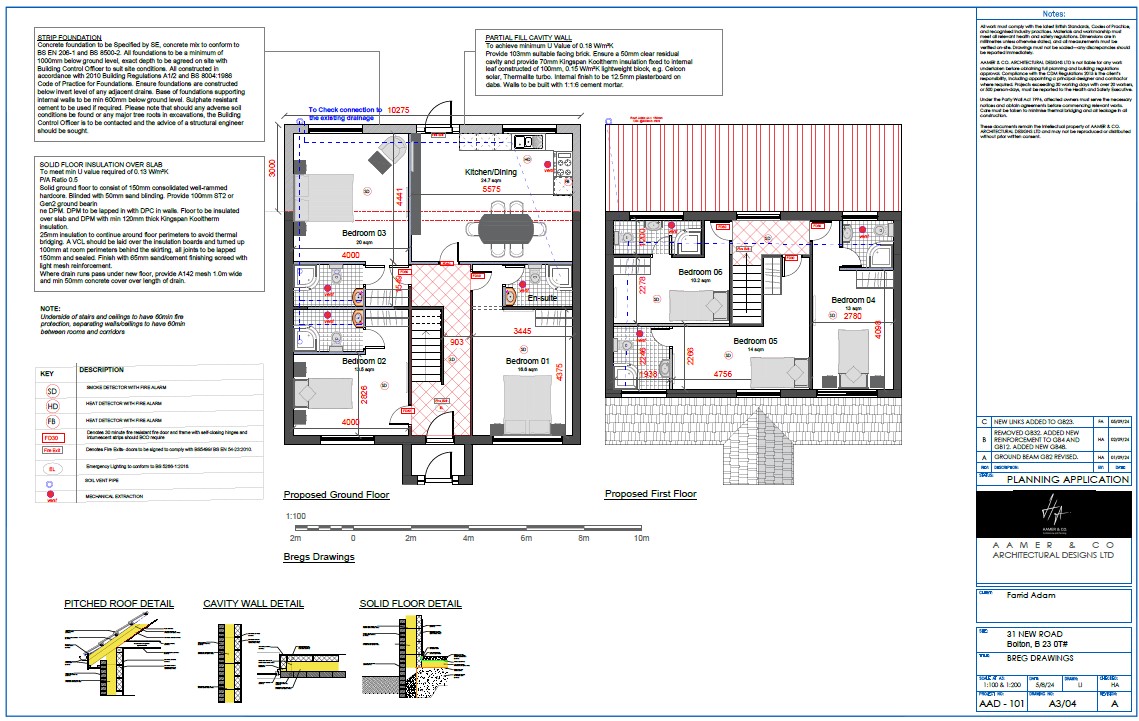
4. Concept Design & HMO Layout Development
Once the regulatory path was established, the architectural team developed a layout optimised for:
6 compliant bedrooms
A functional communal space
Adequate kitchen provisions
Natural daylight and ventilation
Fire escape strategy and compartmentation
Efficient circulation for a future 10-bed expansion
This stage ensures the building is not only compliant but also livable, comfortable, and financially efficient.
5. Full Planning Application: Preparing for Expansion
To move from 6 to 10 bedrooms (Sui Generis), a full planning application will be submitted.
The architectural submission will include:
Design & Access Statement (DAS)
Waste Management Statement
All planning drawings
Housing standards compliance documents
Fire and safety layout notes
Drainage and service strategies
By supporting the application with complete documentation, the project moves smoothly through local authority review.
6. Building Regulations Compliance: Ensuring Safety and Performance
Regardless of whether work falls under PD or full planning, Building Control approval is mandatory.
This stage covers:
Structural calculations
Fire doors, escape routes, and alarms
Acoustic and thermal performance
Drainage layout
Ventilation requirements
Electrical & plumbing compliance
Architects coordinate with engineers to ensure the home meets modern construction and safety standards.
7. Construction & Delivery
Once approvals are obtained, construction begins on:
The rear extension
Internal structural changes
New partitions for bedrooms
Fire compartmentation
Electrical and plumbing installation
Final finishes and compliance inspections
Site coordination ensures the design intent is followed through to completion.
8. Final HMO Licensing & Operational Readiness
The last stage marks the transition from construction to occupation, including:
HMO Licence application
Council inspections
Fire safety certifications
Electrical & gas safety certificates
Final Building Control sign-off
Once licensed, the property becomes a fully compliant, income-generating HMO.
A Blueprint for High-Return Residential Investment
The Whitehill Avenue project demonstrates that successful HMO development is not simply about adding bedrooms—it’s about following a clear architectural and regulatory pathway. With strategic design, thorough planning, and full compliance at each stage, an ordinary home can become a high-yield, long-term investment asset.
This process shows how architecture is evolving beyond design—becoming a key financial strategy for modern property investors.